


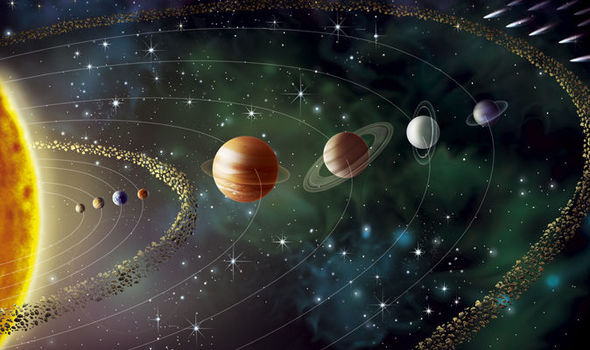
Retrograde planets have long provoked curiosity, fears, and myths. In popular culture, the word “retrograde” is often associated with chaos, delays, or “bad luck.” But viewed from a psychological and evolutionary angle, retrogradation is a much deeper process—an inner cycle of re-evaluation, repetition, and transformation.
What does “retrogradation” actually mean?
Retrogradation is an optical effect. The planet does not move backward in real space. From Earth’s point of view, it appears to slow down, stop, and move backward. This is an illusion caused by differences in orbital speeds.
But in an astrological-psychological sense, retrogradation symbolizes:
- slowing down of external processes;
- an inward focus;
- a return to old themes;
the dismantling of mechanisms that have been automatic for us.
As if cosmic energy presses a “review button,” allowing us to see beneath the surface.
How often does it happen?

Retrogradation is a natural and recurring cycle. Every planet, except the Sun and the Moon, has periods of retrogradation, but the frequency and duration differ:
- Mercury: 3–4 times a year, for about 20–24 days.
- Venus: once every 18 months, for about 40 days.
- Mars: once approximately every 2 years, for 2–2.5 months.
- Jupiter and Saturn: almost once a year, for about 4 months.
- Uranus, Neptune, Pluto: nearly half of the year.
In other words, retrogradation is not an exception—it is part of the normal pulse of development.
General Influence: Slowdown, Reassessment, and Collective Cycles
When a planet turns retrograde, the themes it governs slow down or require revision. This is not a “punishment,” but a collective moment of awareness.
- Mercury retrograde:
Collective attention turns to the structure of information, the quality of communication, and the logic of thinking. The world returns to unfinished matters, reviews contracts, and corrects errors.
- Venus retrograde:
Themes such as attachment, values, relationships, and aesthetics are reworked. Overall sensitivity increases, and collective taste shifts.
- Mars retrograde:
Willpower, direction, decisiveness, action. Collective tension builds, and old conflicts resurface to be seen.
- Jupiter, Saturn, and the outer planets retrograde:
They influence social structures—philosophy, morality, systems, power, economy, and long-term trends. These are periods of reassessing laws, policies, and collective values.
Retrogradation collectively invites the world to return to the source, to release accumulated tension, and to correct hidden errors.
Personal Influence: Inner Work and Psychological Clearing

Psychologically, retrogradation resembles a cycle in which outward movement stops and turns inward. These are moments in which a person:
begins to become aware of internal patterns that have previously been automatic;
encounters old situations, people, or themes that carry unfinished lessons;
feels the need to repair, reconsider, and clarify;
returns to the root of their behavior, motivations, and choices.
Mercury retrograde on a personal level:
Mental flaws, omissions, incorrect assumptions, and hidden fears around communication rise to the surface. This is a chance to slow down and observe how you think.
Venus retrograde:
Themes of love and self-worth return to a starting point. We see attachment wounds, patterns in partnerships, unresolved inner needs.
Mars retrograde:
Old aggression, suppressed will, or fear of action emerge for reworking. A person asks: “Why am I doing this? For whom? What is stopping me?”
Jupiter, Saturn, Uranus, Neptune, Pluto retrograde:
They activate larger inner processes—meaning, boundaries, freedom, trust, shadow, transformation. These are periods of deep psychological change, often invisible from the outside but tectonic within.
The Psychological Essence of Retrogradation
Retrograde periods are inner seasons.
They do not ask us to move forward. They ask us to move inward.
They:
- activate intuition;
- sharpen sensitivity;
- activate subconscious layers;
bring to the surface guilt, fears, and habits that no longer serve us.
Retrogradation is a psychological cleansing.
Personal growth is cyclical, not linear. In periods of “going backward,” true progress actually takes place.
How to Work with Retrograde Periods?

- Slow down. Retrogradation does not favor haste. The more you force yourself, the more resistance appears.
- Review the old. Repetition is not a mistake—it is a second chance to do it better.
- Pay attention to inner signals. The psyche gives signs when something is ready for re-evaluation.
- Ask yourself, “What haven’t I seen until now?” Retrogradation = new awareness through old material.
- Protect the nervous system. More silence, less impulsiveness.
Conclusion

Retrograde planets are not an obstacle, but a process.
Not a punishment, but an invitation.
Not a collapse, but a revision.
They are the cosmic moments in which life brings us back to the beginning of a theme, so we can complete it with greater awareness.
The more we understand them, the more naturally and meaningfully we begin to accept the cyclic nature of our own inner world.
And retrograde periods become not a threat, but our deepest opportunities for growth.
Maxalo APP
Maxalo е мобилно приложение специално създадено за всеки, който се занимава с радиестезия – от начинаещи до напреднали.
Магазин за радиестезия
Представяме ви специалната ни селекция от квантови продукти и радиестезични инструменти, разработени от Вълко Чобанов.
Maxalo обучения
Платформа за онлайн курсове и сертифицирани обучения по радиестезия подходящи както за начинаещи, така и за напреднали радиестезисти.