


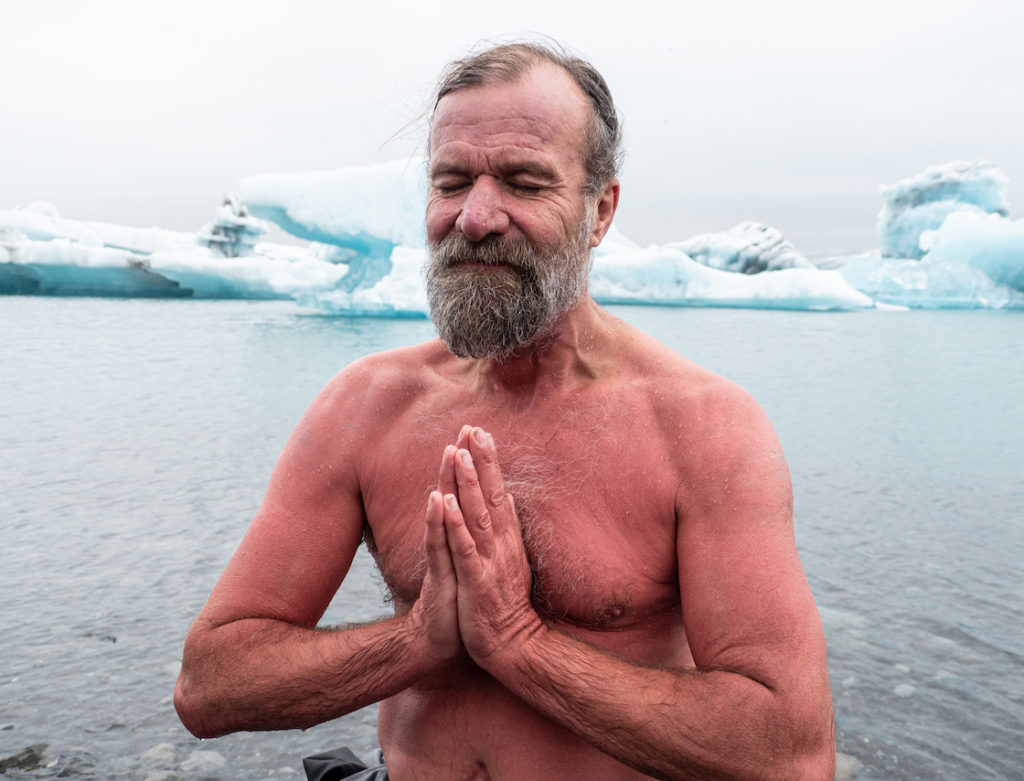
The Wim Hof Method (WHM) combines controlled hyperventilation, breath retention, cold exposure (such as ice baths), and meditative practices. Recent scientific studies indicate that this technique can influence the autonomic nervous system, immune response, and metabolic activity. This article examines the physiological mechanisms triggered by WHM, as well as the potential benefits and risks associated with its practice.
Although the Wim Hof Method is widely known for its physical benefits, it also contains profound spiritual elements. This text explores how breathing, cold exposure, and conscious focus can serve as tools for inner transformation, the activation of higher states of consciousness, and a deepened presence in the present moment.

The technique includes cycles of:
Approximately 30–40 deep inhalations and exhalations (hyperventilation);
Followed by breath retention after exhalation (apnea);
A short deep inhalation and holding the breath for 10–15 seconds;
Repeating the cycle 3–4 times.
2.2. Physiological Effects
Blood alkalization: Hyperventilation reduces CO₂ levels in the blood, leading to an increase in pH (respiratory alkalosis).
Hypoxia and adaptation: Breath retention creates short-term hypoxia, stimulating the production of erythropoietin (EPO) and improving oxygen metabolism.
Stimulation of the sympathetic nervous system: A study by Kox et al. (2014) shows that WHM practitioners can consciously increase adrenaline levels, resulting in an anti-inflammatory response.
2. Breath as a Gateway to Expanded Consciousness
“Breathing is the key to the spirit. When you master the breath, you can open portals within yourself that you never knew existed.”
—Wim Hof
2.1. Changes in Mental State
Many WHM practitioners report:
a sense of unity with the surrounding environment;
stepping beyond the mind and immersing fully in the present moment;
mystical experiences similar to meditation or even psychedelic states (without the use of substances).
2.2. Activation of the Inner Light
During the breathing practice, people often experience:
energetic movement throughout the body (similar to kundalini);
opening of the heart or third-eye chakra;
a sense of purity and release from emotional burden.
3. Cold as a Spiritual Teacher

Wim Hof calls the cold a “blessed friend.” It is not an enemy, but a test and a mirror:
Overcoming the ego: When confronted with the cold, the mind and body react with panic. Only through full presence and surrender can we move through it.
Discipline and humility: Cold exposure requires respect, discipline, and trust in the body and in nature.
4. Spiritual Transformation through WHM
4.1. Presence
The method develops the ability to live in the here and now—the foundation of nearly all spiritual teachings.
4.2. Reconnection with the Self
Breathing and cold exposure pull a person away from external stimuli and bring them back into contact with the body, intuition, and inner truth.
4.3. Opening to the Higher
Some practitioners describe a sense of connection with “something greater”—whether God, the Universe, Nature, or the Higher Self.
Maxalo APP
Maxalo е мобилно приложение специално създадено за всеки, който се занимава с радиестезия – от начинаещи до напреднали.
Магазин за радиестезия
Представяме ви специалната ни селекция от квантови продукти и радиестезични инструменти, разработени от Вълко Чобанов.
Maxalo обучения
Платформа за онлайн курсове и сертифицирани обучения по радиестезия подходящи както за начинаещи, така и за напреднали радиестезисти.