


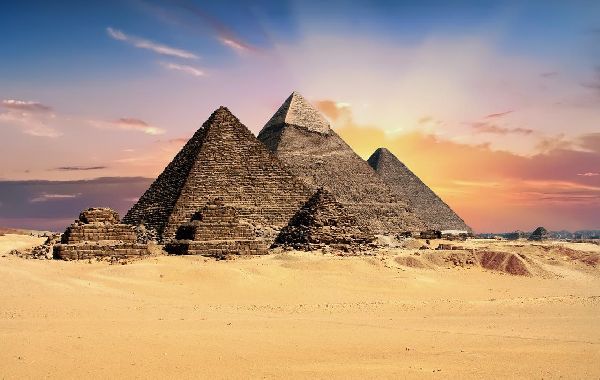
The temples of Ancient Egypt were not merely places of worship, but living universes built of stone and symbols. They were bridges between the world of humans and the world of the gods—places where cosmic forces descended to Earth to uphold the order of Ma’at, the harmony of the universe.
The Temple as Cosmos
The architecture of each temple was a reflection of the Cosmos. The entrance symbolized the horizon where the Sun rises. The massive pylons, adorned with reliefs of the pharaoh defeating chaos, served as a gateway into the sacred space. The colonnades represented the forest of primordial reeds emerging from the primeval ocean Nun, while the dark inner halls reenacted the journey toward the original act of creation.
In the deepest part—the sanctuary—the statue of the deity was kept. This was the place where the invisible became embodied in the visible, and where the human being could touch eternity.
Historical Examples
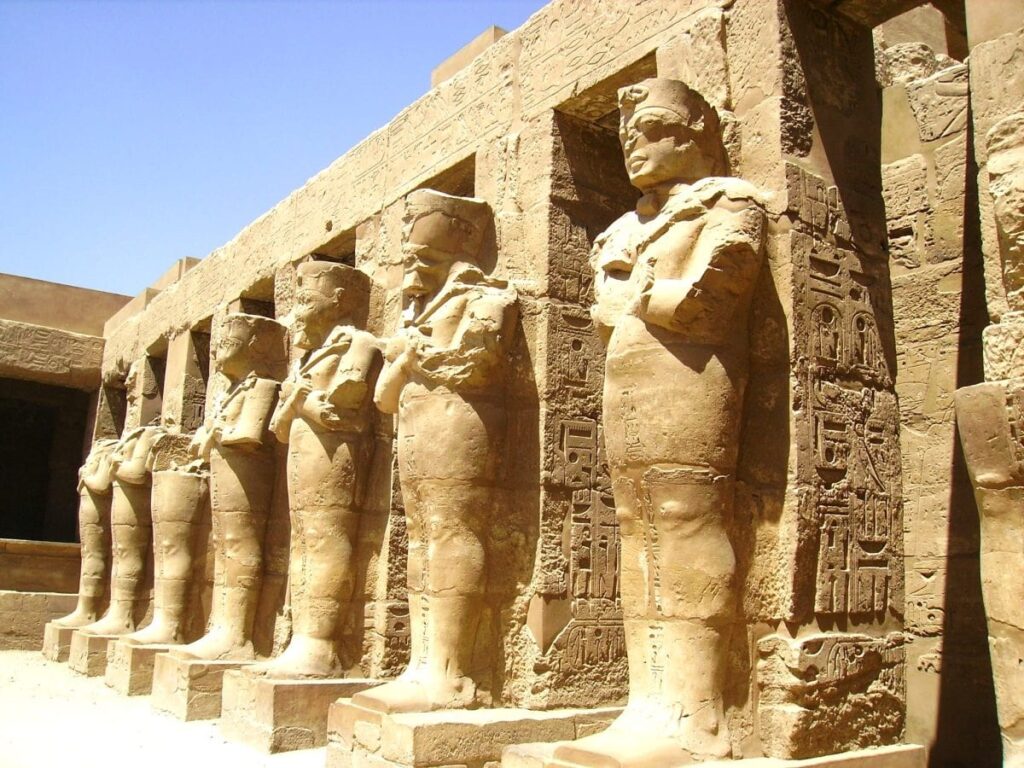
The Temple of Karnak (Thebes), dedicated to the god Amun-Ra, is one of the most magnificent temple complexes in the world. The vast hall with its 134 columns creates the feeling that one is walking through a forest of stone pillars holding up the sky.
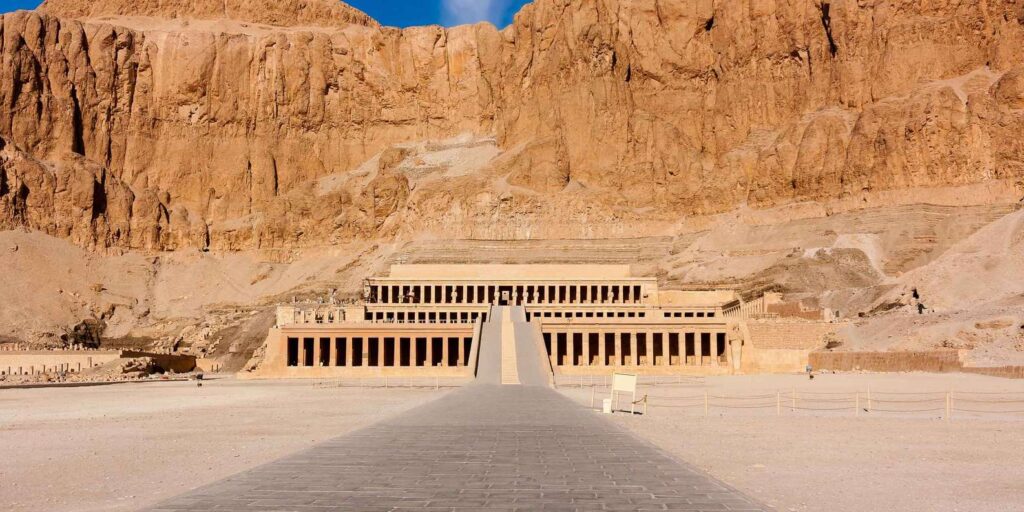
The Temple of Hatshepsut at Deir el-Bahri—built by the female pharaoh in the 15th century BCE—appears to be carved directly out of the rock. Its architecture combines austerity and elegance, telling a story of harmony between the earthly and the divine.
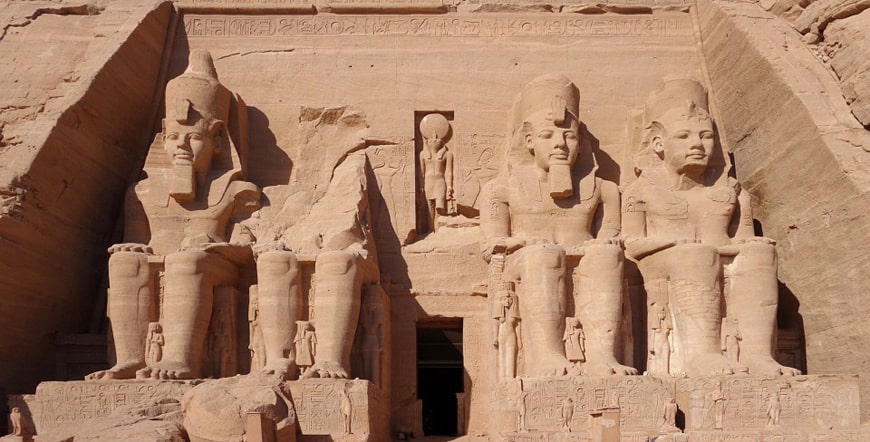
The Temple of Abu Simbel—built by Ramses II. Twice a year, the Sun penetrates into the inner sanctuary and illuminates the statues of the gods—a cosmic calendar woven into stone.
The Temple as a Place of Initiation
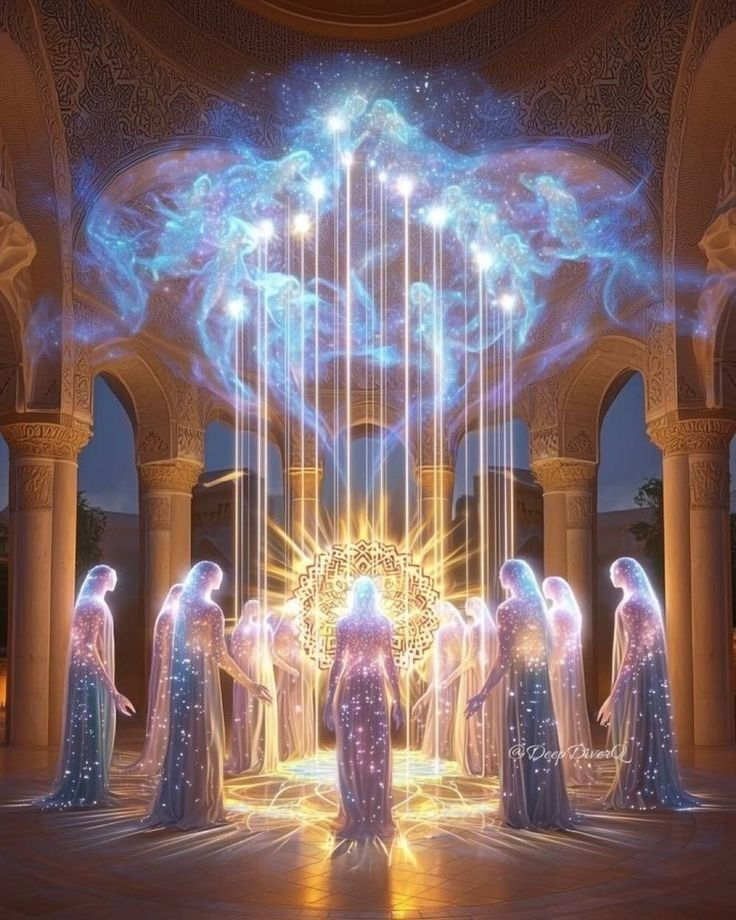
The temples were also centers of knowledge. The priests safeguarded astronomical, medical, and magical secrets there. The inner halls were accessible only to initiates—because the journey through the temple was also an inner journey. From the light of the entrance, through the half-shadows of the columned halls, to the complete darkness of the sanctuary—this was a symbolic passage from the outer to the inner, from the human to the divine.
Philosophical Meaning
The temple in Egypt was not merely a structure—it was a living mandala of the world. By crossing its threshold, a person did not enter a building, but the cosmos itself. The stone spoke, the columns sang, the wall reliefs whispered—everything was devoted to one purpose: reminding humanity that it is part of eternity.
he Testament of Stone
Even today, when we stand among the ruins of Luxor, Karnak, or Abu Simbel, we sense that these temples are not dead. They continue to vibrate with the energy of millennia of prayers and rituals. The Egyptians believed that stone preserves memory and the breath of the gods—and perhaps that is why their temples still make us feel that time is an illusion, and eternity is real.
Maxalo APP
Maxalo е мобилно приложение специално създадено за всеки, който се занимава с радиестезия – от начинаещи до напреднали.
Магазин за радиестезия
Представяме ви специалната ни селекция от квантови продукти и радиестезични инструменти, разработени от Вълко Чобанов.
Maxalo обучения
Платформа за онлайн курсове и сертифицирани обучения по радиестезия подходящи както за начинаещи, така и за напреднали радиестезисти.